charity-duchess-quamino

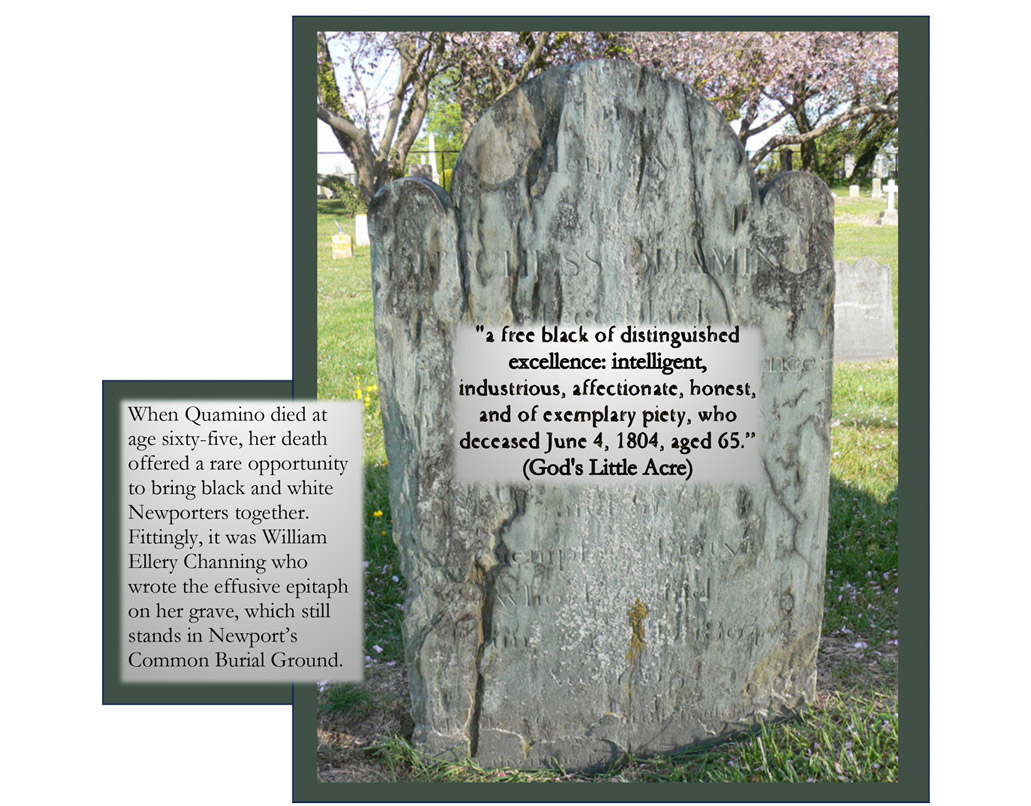
Duchess Quamino was born on the Gold Coast of what is now Ghana around 1739, kidnapped as a young girl and brought to Newport, RI, where William Channing, the colony’s attorney general, enslaved her. In his house, she excelled in baking, a skill that would sustain her in later years.

Quamino converted to Christianity while enslaved, and by 1769, she married African John Quamino, whose prosperous Ghanaian family had sent him to learn a trade in North America. Instead, an unscrupulous captain sold him into slavery. John later purchased his freedom with earnings from a winning lottery ticket. The couple had at least three children: Charles (born in 1772), Violet (1776), and Katharine Church (1779).

In the fall of 1779, Quamino learned of her husband’s death. He had enlisted as a privateer in the Revolutionary War, presumably to earn enough money to purchase his wife’s freedom, and died battling the British. Quamino secured her freedom (and likely that of her children) by 1780. Local folklore suggests that she baked her way to freedom, using the Channings’ oven to make pastries that she sold to locals.

Like many newly freed blacks, Quamino remained in the same household as a servant, where she became the caretaker for the family’s newest member, William Ellery Channing. Born in 1780, he would later gain fame as a prominent Unitarian clergyman and abolitionist, possibly influenced by Quamino’s presence in his early life. By 1782, Quamino had established an independent household. At the same time, she was gaining local fame as a cake baker.
first-peoples-aquidneck

When Europeans first began to explore what is now Rhode Island in the 1500s, five indigenous groups were living in the area: the Pequots, the Nipmucs, the Niantics, the Narragansetts, and the Wampanoags. Among these, the Narragansett and Wampanoag tribes were the most predominant.

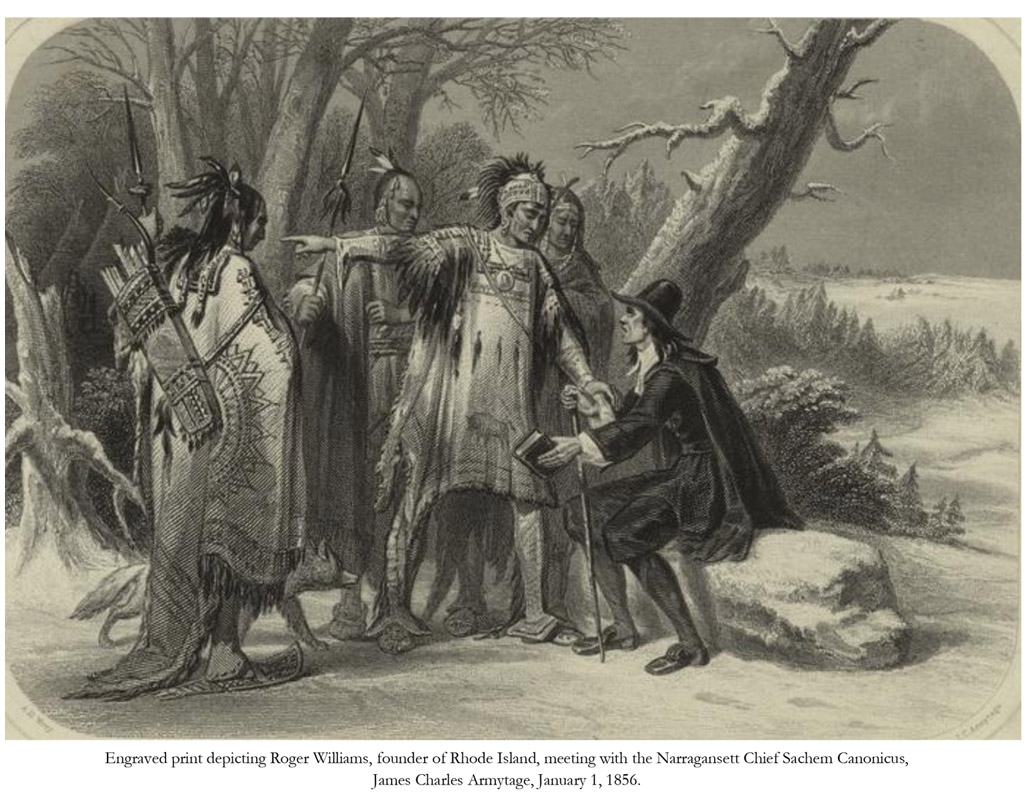
The Narragansett Nation may have been the largest tribe in Rhode Island during the 17th century. As the Wampanoags declined, in part due to diseases brought by the colonists, the Narragansetts took over their territory on the islands in what is now Narragansett Bay. Narragansett Chieftains Canonicus and Miantonomi signed the 1637 deed, which formally sold Aquidneck Island to William Coddington, leader of a small group of English settlers, in exchange for wampum beads, winter coats, and gardening implements.

A large Native American village existed in what is now called Newport, serving as the summer home for the Narragansett people. It is safe to say that the current site of Touro Synagogue was within this community.

colonial-era-mikvah

Sorry, that was just a teaser; we are no closer to determining if Newport had a mikvah (Jewish ritual bath) in colonial times, but here is what we know.

Sephardic Jews built mikvot throughout the Atlantic world in the 1600s and 1700s. Archaeological remains, reconstructions, and several surviving mikvah structures have been found in Recife, Curacao, St. Eustatius, Barbados, Surinam, and Nevis. Shearith Israel (NYC) built the earliest known mikvah in the United States, ca 1730, and rebuilt it in stone in 1759. Philadelphia’s Mikveh Israel had one by 1782, and in 2001, near Baltimore’s Lloyd Street Synagogue, the remains of a mikvah were found.

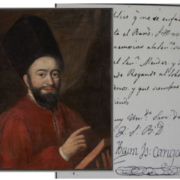
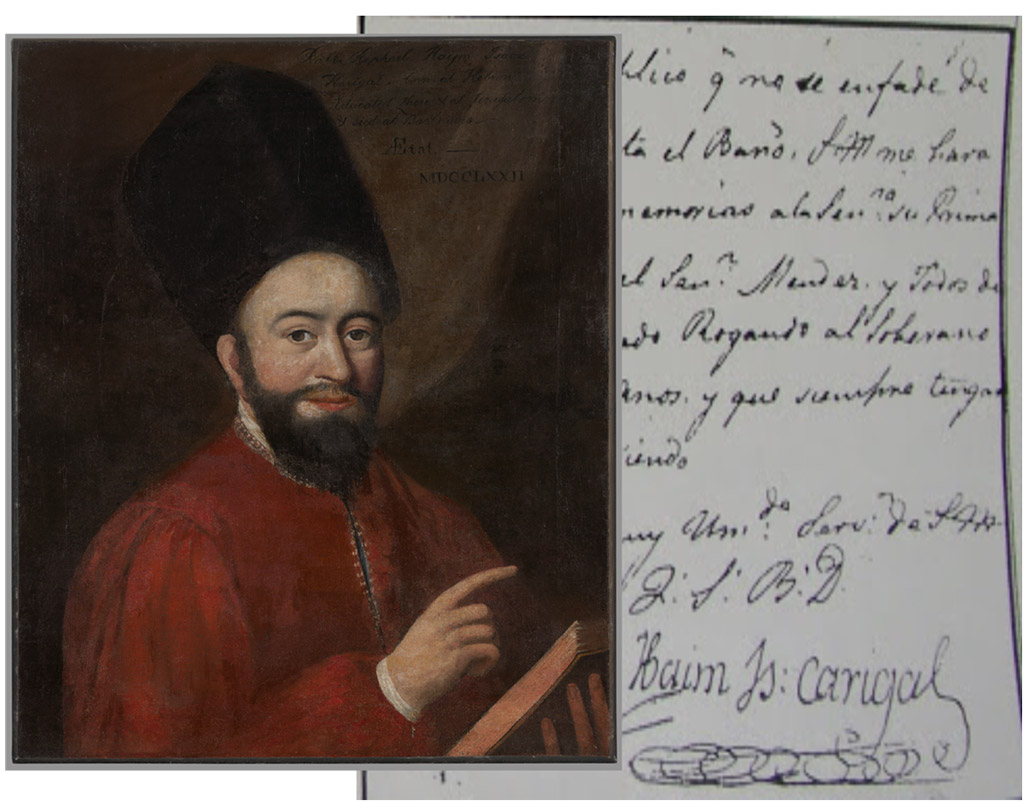
The only known reference to a mikvah in Newport comes from a letter written by Rabbi Haim Carigal¹ (then living in Barbados) to Aaron Lopez² asking “me avise como está el Baño” (can you tell me how the mikvah is going).³ The letter isn’t dated, but Carigal left Newport in July of 1773, made a brief stop in Surinam, and then continued to Barbados, where he died in May of 1777. The project never materialized, perhaps due in part to the coming of the Revolution.


¹Born in Hebron in 1733, Rabbi Carigal traveled throughout the world before arriving in the colonies. He arrived in Newport in March 1773, where he delivered the first rabbinical sermon published in the colonies at what is now called Touro Synagogue. https://jewishrhody.com/stories/rabbi-haim-isaac-carigal-and-the-first-rabbinical-sermon-published-in-the-colonies,2684.

²Aaron Lopez: https://tsfnewport.org/history/jews-in-early-america/#jews-honored-patriots-park.

³From the collection of Menashe Lehman, printed in “Early Relations Between American Jews and Eretz Yisrael.” Algemeiner Journal 3 March 1992, B3.