Charity “Duchess” Quamino: “The Pastry Queen of Rhode Island”
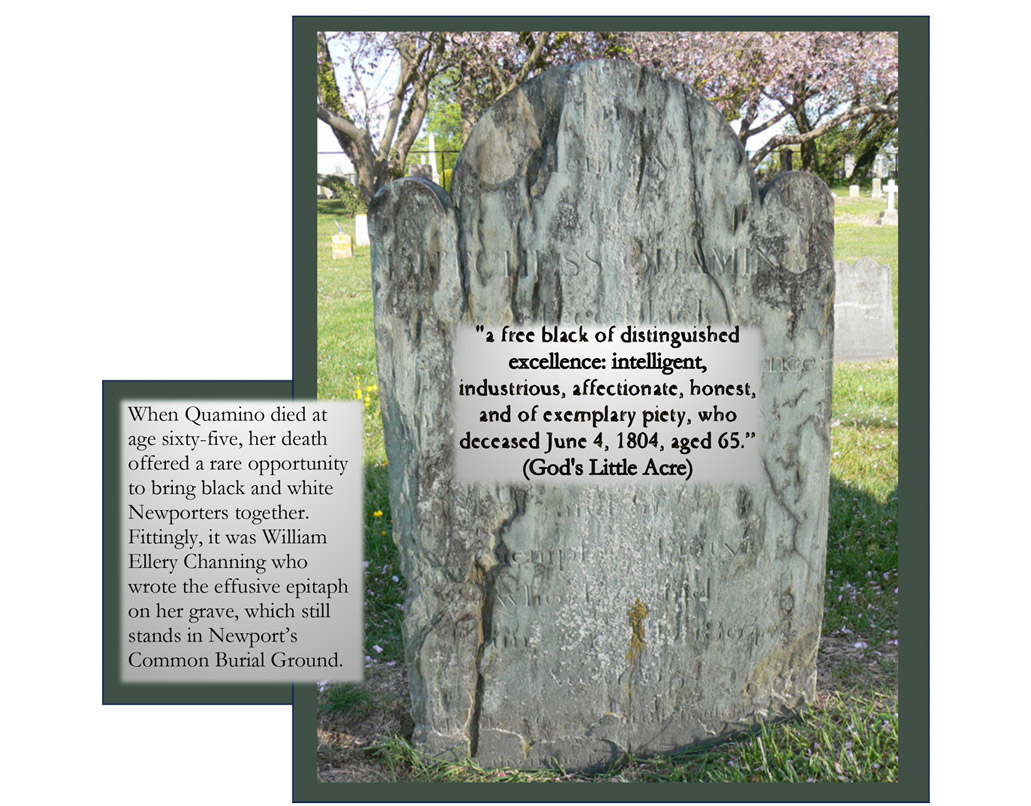
Duchess Quamino was born on the Gold Coast of what is now Ghana around 1739, kidnapped as a young girl and brought to Newport, RI, where William Channing, the colony’s attorney general, enslaved her. In his house, she excelled in baking, a skill that would sustain her in later years.
Quamino converted to Christianity while enslaved, and by 1769, she married African John Quamino, whose prosperous Ghanaian family had sent him to learn a trade in North America. Instead, an unscrupulous captain sold him into slavery. John later purchased his freedom with earnings from a winning lottery ticket. The couple had at least three children: Charles (born in 1772), Violet (1776), and Katharine Church (1779).
In the fall of 1779, Quamino learned of her husband’s death. He had enlisted as a privateer in the Revolutionary War, presumably to earn enough money to purchase his wife’s freedom, and died battling the British. Quamino secured her freedom (and likely that of her children) by 1780. Local folklore suggests that she baked her way to freedom, using the Channings’ oven to make pastries that she sold to locals.
Like many newly freed blacks, Quamino remained in the same household as a servant, where she became the caretaker for the family’s newest member, William Ellery Channing. Born in 1780, he would later gain fame as a prominent Unitarian clergyman and abolitionist, possibly influenced by Quamino’s presence in his early life. By 1782, Quamino had established an independent household. At the same time, she was gaining local fame as a cake baker.